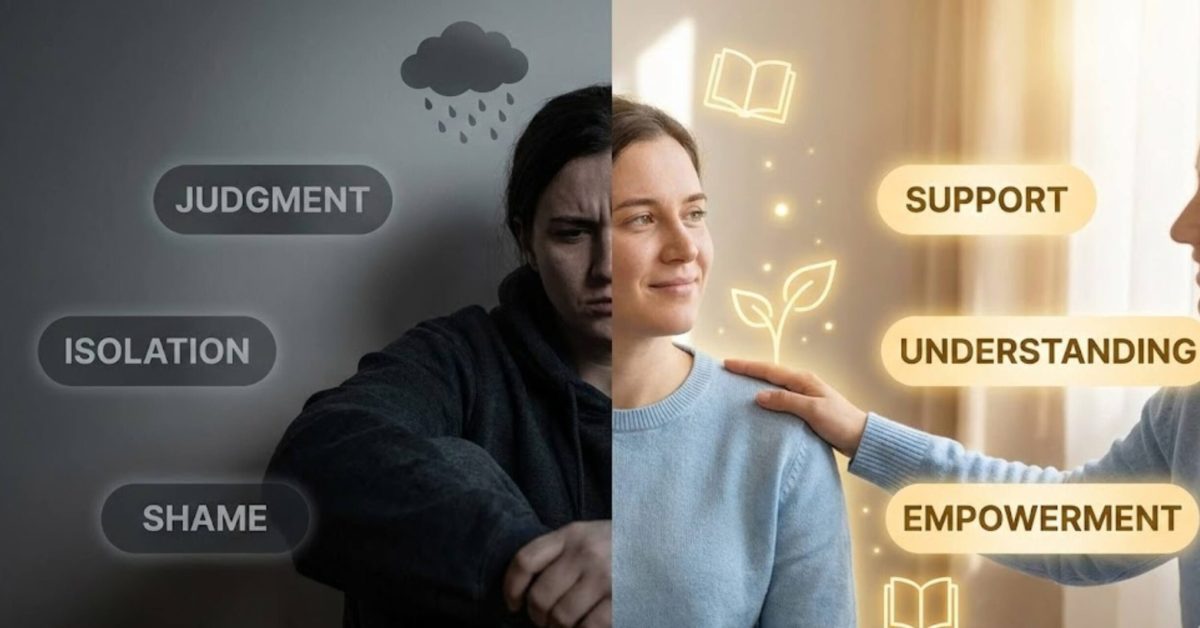
Stigma refers to negative attitudes, stereotypes, and discriminatory behaviors directed toward individuals or groups based on characteristics such as mental illness, substance use, or recovery status. It can take many forms: public stigma, self-stigma, institutional stigma, and social or peer stigma. Each can significantly affect mental health, physical well-being, and recovery outcomes.
Stigma often becomes an invisible barrier that discourages people from seeking help, reinforces shame, and deepens emotional isolation. It shapes how society views individuals in recovery, and how individuals view themselves.
Understanding what stigma is, how it develops, and its impacts on health and recovery is essential for building a compassionate, supportive, and informed community.
Understanding Stigma
Stigma is more than a label. It is a harmful social process that shapes how people are perceived, treated, and supported. According to the American Psychiatric Association (APA), stigma involves prejudice and discrimination toward individuals based on distinguishing characteristics such as mental health conditions or a history of substance use.
In mental health and addiction contexts, stigma often arises from misinformation, fear, cultural norms, and moral judgment.
These misconceptions can lead to shame, social isolation, and barriers to care. Understanding stigma is crucial because it directly affects public attitudes, healthcare practices, and long-term recovery outcomes.
How Stigma Develops
Stigma is more than a label. It is a harmful social process that shapes how people are perceived, treated, and supported. According to the American Psychiatric Association (APA), stigma involves prejudice and discrimination toward individuals based on distinguishing characteristics such as mental health conditions or a history of substance use.
In mental health and addiction contexts, stigma often arises from misinformation, fear, cultural norms, and moral judgment.
These misconceptions can lead to shame, social isolation, and barriers to care. Understanding stigma is crucial because it directly affects public attitudes, healthcare practices, and long-term recovery outcomes.
How Stigma Develops
Stigma doesn’t appear overnight. It is a product of cultural beliefs, social interactions, and systemic influences. Research shows that stigma develops through:
- Media Influence: Movies, TV shows, and news often portray mental illness or addiction in exaggerated or negative ways, reinforcing harmful stereotypes.
- Cultural Norms: In some cultures, seeking help is viewed as a weakness, leading to silence and shame.
- Social Pressure: Peers may exclude or ridicule people struggling with addiction or mental health conditions, intensifying internalized shame.
- Systemic Factors: Laws, policies, and healthcare practices can reinforce stigma by limiting access to care or relying on approaches that overlook the complex realities of mental health and addiction.
Types of Stigma
Understanding the different types of stigma helps individuals recognize patterns and address them effectively.
- Public Stigma: Society’s negative beliefs or stereotypes (e.g., calling someone with addiction “irresponsible” or “weak”).
- Self-Stigma: When people internalize these negative beliefs, it results in shame, fear, or loss of self-worth.
- Social or Peer Stigma: Judgment, exclusion, or distancing from friends, family, coworkers, or community members.
- Institutional Stigma: Embedded discrimination in policies or systems that limits access to employment, education, or healthcare.
Each type of stigma compounds the others, creating emotional, social, and structural barriers to health and recovery.
How Stigma Impacts Health
Stigma has profound consequences on mental and physical health:
Mental Health Effects:
- Social withdrawal or avoidance of treatment
- Increased shame, anxiety, and depression
- Worsened symptoms due to delayed support
Physical Health Effects:
- Chronic stress raises cortisol, affecting heart health and the immune system
- Avoidance of healthcare leads to untreated conditions
- Higher risk of relapse or emergency health crises
Stigma has profound consequences on mental and physical health:
How Stigma Affects Recovery
For many, recovery is already a vulnerable journey, and stigma adds additional weight.
- Discourage people from starting or completing treatment
- Cause individuals to hide their progress, limiting support
- Increase self-doubt, fear of judgment, or relapse risk
- Frame recovery as a “moral issue” instead of a medical and psychological process
What Stigma Looks Like in Healthcare
Healthcare stigma is especially harmful because it affects access to care and quality of treatment.
Common examples include:
- Dismissive or biased attitudes from providers
- Unequal access, delayed diagnoses, or lower-quality care
- Lack of empathy or trauma-informed practices
We can combat this using the following:
- Using person-first language (“person with a substance use disorder” instead of “addict”
- Training healthcare teams on stigma reduction
- Improving equitable access to services
How Self-Stigma Impacts Mental Health
Self-stigma can be one of the most damaging forms because it shapes how individuals view themselves.
Self-stigma often leads to:
- Reduced self-esteem and confidence
- Avoidance of treatment or social situations
- Fear of being judged
- Hopelessness or the belief that change isn’t possible
Evidence-based approaches, such as therapy, peer support, psychoeducation, and skills training, can help individuals recognize and challenge these beliefs and rebuild empowerment.
Breaking the Cycle of Stigma
While stigma is widespread, it can be challenged and reduced through consistent individual and community actions.
- Education: Learn about addiction and mental health to replace myths with evidence-based facts.
- Language: Use compassionate, person-first language that honors dignity and reinforces hope.
- Empathy & Advocacy: Speak out against harmful comments, share uplifting recovery stories, and support inclusive environments.
- Community Awareness: Support policies and programs that prioritize treatment, not punishment.
Final Thoughts
Stigma is one of the most significant barriers to mental health and addiction recovery, but it is not unchangeable. Through awareness, compassion, and evidence-based education, individuals and communities can play a role in breaking the cycle.
By choosing understanding over judgment, we create spaces where people feel safe asking for help, sharing their stories, and continuing their healing journey.
Recovery becomes not just possible, but sustainable.
Frequently Asked Questions
Stigma can discourage people from seeking or completing treatment and may increase relapse risk. It reduces support, reinforces shame, and undermines motivation.
Stigma increases stress, anxiety, and fear of judgment, leading to avoidance of medical or mental health care. It worsens symptoms and lowers treatment adherence.
Healthcare stigma refers to biased attitudes or discriminatory behaviors from providers toward individuals with addiction or mental illness. Training, empathy, and person-first language help reduce it.
Self-stigma lowers self-worth, reduces confidence, and increases isolation. It can worsen depression and delay treatment. Therapy, support groups, and education help individuals challenge internalized beliefs.