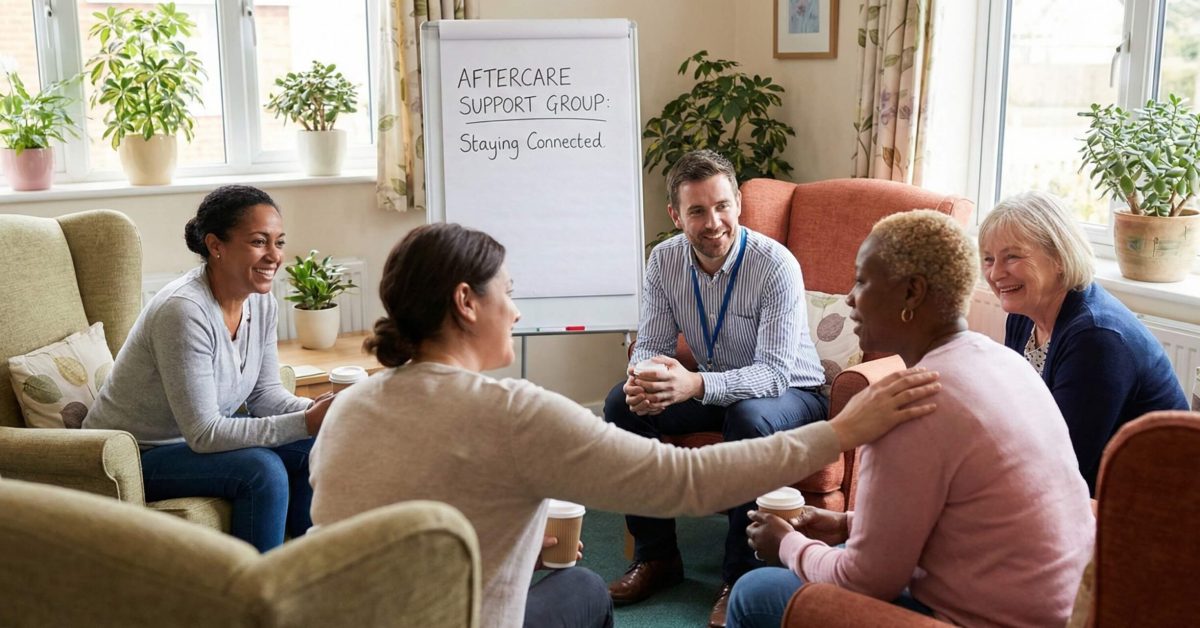
Recovery doesn’t end when treatment does; it continues to evolve. Many people leaving rehab face a challenging transition back into everyday life, where stress, triggers, and familiar routines can begin to test their progress. Without continued guidance, relapse becomes a real risk.
Research from the National Institutes of Health (NIH) shows that individuals who participate in structured aftercare programs have significantly higher long-term sobriety rates compared to those who do not. In other words, aftercare isn’t an optional add-on. It is an essential part of recovery.
In this article, we’ll explore the importance of aftercare, the role of families, and how Indiana addiction treatment centers, including Sunrise Recovery’s Clarksville rehab center, support lasting sobriety long after rehab ends.
Why Aftercare Matters in Addiction Treatment
Leaving inpatient or outpatient treatment is a milestone worth celebrating, but the first year of recovery often introduces new vulnerabilities. Life stressors, relationship dynamics, and environmental triggers frequently return, making relapse prevention support crucial.
A 2024 study published in Mathematical Biosciences found that over 60% of individuals relapse within one year without consistent post-treatment support. Aftercare bridges the gap between structured treatment and independent living by offering ongoing guidance, accountability, and community.
Aftercare programs in Indiana commonly include:
- Coping skill reinforcement for stress management and cravings
- Accountability through therapy sessions, alumni meetings, and check-ins
- Social support via recovery groups or community events
- Healthy lifestyle guidance on fitness, nutrition, and sleep
- Relapse prevention planning for managing high-risk situations
This ongoing structure helps people stay motivated, rebuild confidence, and maintain the healing they began in treatment.
The Role of Family and Friends in Aftercare
A strong support system is one of the most transformative elements in long-term recovery. Professional therapists guide the clinical journey, but family and friends provide daily encouragement and stability.
Emotional Support
Being present is often the greatest gift a loved one can offer. Many people in recovery struggle with shame, fear, or isolation. Regular check-ins, active listening, and celebrating small victories help rebuild trust and hope.
Practical Support
Families can support recovery by:
- Encouraging therapy attendance
- Helping create routines
- Removing substances from the home
- Participating in healthy activities like walks or meal planning
For many in Indiana recovery programs, involved and supportive loved ones significantly improve long-term treatment engagement.
Common Challenges for Loved Ones
Supporting someone in recovery can be meaningful, but it can also feel overwhelming. Loved ones often experience:
- Helplessness when progress slows
- Frustration during setbacks
- Burnout from constant worry
- Difficulty setting boundaries
- Guilt or self-blame
- Unrealistic expectations about “quick recovery”
Recognizing these challenges allows families to seek their own support through therapy or education programs offered at many addiction treatment centers in Indiana.
Tips for Effective Aftercare Involvement
Aftercare works best when individuals, families, and clinicians move forward as a team. Here are practical ways loved ones can strengthen recovery:
Sunrise Recovery encourages family involvement through therapy, educational sessions, and supportive workshops tailored to the individual’s recovery stage.
Dual-Diagnosis and Aftercare
Many people in recovery also experience anxiety, depression, trauma, or other mental health conditions, a combination known as dual diagnosis. When both conditions affect one another, treatment must be integrated.
Without mental health support, relapse risk increases. Aftercare must include:
Sunrise Recovery’s Dual Diagnosis Treatment provides comprehensive, ongoing support that addresses both mental health and substance use, helping clients maintain long-term stability.
When to Seek Professional Help
Even with strong family support, there are moments when professional guidance becomes essential. Early intervention can prevent setbacks from escalating.
Warning signs someone may need more structured support:
Sunrise Recovery’s Alumni Program offers ongoing peer support, group meetings, and professional guidance to help individuals stay grounded after treatment.
Sunrise Recovery’s Aftercare and Alumni Support
As a trusted Clarksville rehab center, Sunrise Recovery provides comprehensive aftercare to help individuals maintain long-term sobriety. Their programs include:
Clients and families can connect with Sunrise through their contact page to explore options tailored to their needs.
Final Thoughts
Recovery is continuous. It thrives with structure, compassion, and long-term support. Aftercare strengthens the foundation built during treatment and empowers individuals to navigate life with confidence.
For individuals or families across Indiana, the combination of professional addiction treatment, ongoing aftercare, and a strong support network creates the path toward lasting sobriety.
If you or someone you love is transitioning out of treatment, contact Sunrise Recovery in Clarksville, Indiana, to explore aftercare and alumni programs that support a healthier, brighter future.
You can also learn more through the main site: Sunrise Recovery.
Frequently Asked Questions
Aftercare is the ongoing support provided after formal treatment ends. It includes therapy, relapse prevention coaching, educational workshops, peer groups, and structured guidance.
There is no fixed timeframe. Some benefit from a few months, while others stay connected to alumni programs for years.
Yes. The integrated dual-diagnosis program supports both mental health and substance use needs.
Families can join educational sessions, support groups, therapy meetings, and community events to strengthen their role in recovery.