Fentanyl is found in other drugs because it is cheap and extremely potent. Dealers can stretch their supply with tiny amounts. It also spreads through shared equipment and counterfeit pills.
Someone in Indiana who buys a “Percocet” online may get a pill made entirely of fentanyl.
What Is Fentanyl?
Fentanyl is a powerful synthetic opioid. By commonly cited estimates, it is about 50 times stronger than heroin. Doctors prescribe it for severe pain. Illegally made versions are sold on the street.
A dose the size of a few grains of salt can cause a fatal overdose. For more, read our guide to opioid addiction signs, withdrawal, and treatment in Indiana.
4 Reasons Fentanyl Ends Up in Other Drugs
Fentanyl gets into other drugs on purpose and by accident. These are the four main reasons.
It’s cheap and extremely potent
Fentanyl costs far less to produce than most drugs. A tiny amount goes a long way. Dealers stretch their supply and raise profits.
A small bag of powder can be cut into many more doses.
Counterfeit pills are pressed to look real
Fake pills are made to match real medications. Color, logo, and shape prove nothing.
A teen who buys a “Xanax” from a friend of a friend may be taking fentanyl.
Shared equipment causes accidental contamination
Scales, tables, and pill presses carry residue from one product to the next. Even a dealer who never meant to add fentanyl can pass it along.
Mixing is uneven, so every dose is a gamble
Fentanyl is rarely blended evenly. One pill or line can hold far more than the next.
Two people can take pills from the same batch, and only one overdoses.
Which Drugs Are Most Likely to Contain Fentanyl?
Counterfeit pills and heroin carry the highest risk. Cocaine and meth follow. Fentanyl-laced marijuana is widely reported, but confirmed cases are rare.
Stimulant users face a hidden danger. Someone who uses cocaine on weekends has no opioid tolerance, so a hidden trace can be fatal.
Why You Can't See, Smell, or Taste Fentanyl
Fentanyl has no reliable color, odor, or taste. It is often pressed or mixed to look like other drugs. Nothing about how a pill or powder looks can show whether it is safe.
A person who has bought from the same dealer for years can still get a different batch.
Why This Matters Most During Recovery
Recovery lowers a person’s tolerance to opioids. That changes the risk of relapse.
Tolerance drops after time without opioids
The body loses its tolerance to opioids within weeks of stopping. A dose that once felt manageable can now stop breathing.
Someone home from 30 days of treatment may use their old amount and overdose.
Why relapse is more dangerous now
Relapse is common in recovery. Hidden fentanyl makes it far riskier. Lower tolerance and an unknown dose combine.
A relapse is not a failure. Keep naloxone at home so your family can respond. Learn how to support a loved one in recovery.
How to Respond to a Suspected Overdose, Step by Step
Call 911 first. Then give naloxone (Narcan) if you have it. Stay with the person until help arrives.
Say your partner won’t wake up and their lips look blue. Do this:
- Call 911.
- Give naloxone (Narcan).
- Turn them on their side.
- Give a second dose after two to three minutes if there is no response.
- Stay until help arrives.
For a full checklist, read the signs of a fentanyl overdose.
How to Lower Risk if Someone Still Uses
Some loved ones may still use. These steps can lower the risk of a fatal overdose.
Keep naloxone at home, in the car, and on hand
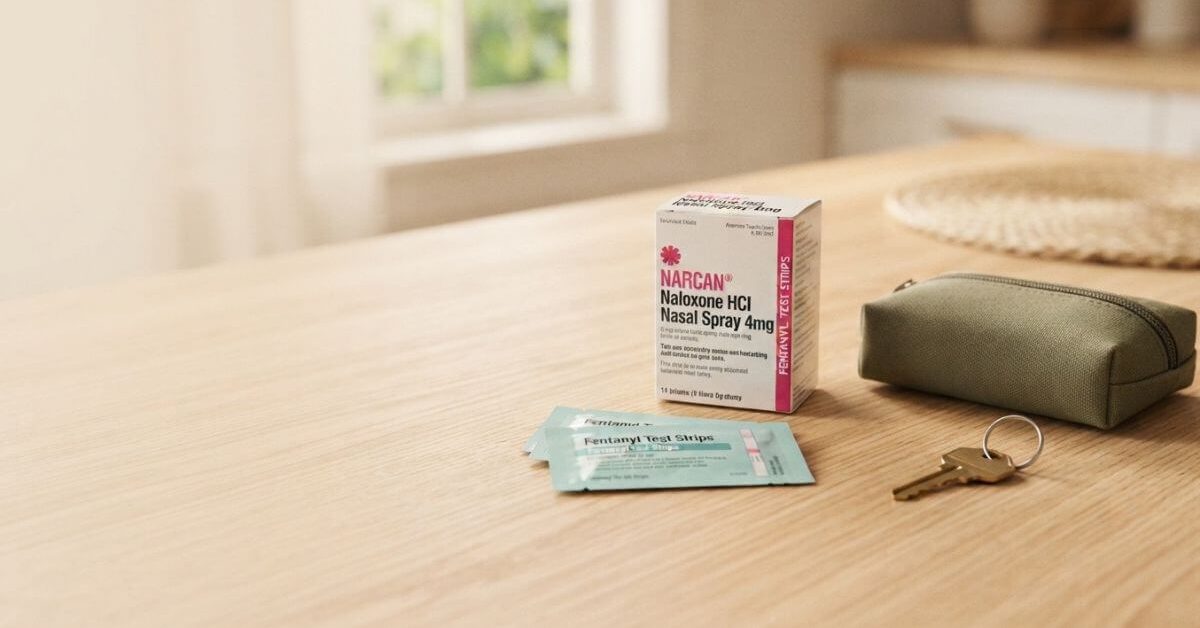
Naloxone reverses an opioid overdose. It only helps if it is within reach. Keep a kit where you spend time. Make sure others in the home know where it is.
A parent who keeps a kit in the glove box can act in minutes.
Test strips: what they can and can’t tell you
Fentanyl test strips show whether fentanyl is in a sample. A negative result does not prove a drug is safe. Mixing is uneven, so one pill can test clear while another does not.
Avoid using alone and start with a small amount
Using with someone nearby means help can be called sooner. Starting with a small amount lowers the chance of a fatal dose.
A person who uses alone in a bathroom may have no one to call 911 or give naloxone.
Fentanyl in Indiana: Data and Local Help
Here is what Indiana data shows and where Hoosiers can find help.
What Indiana overdose data shows
Fentanyl remains the leading cause of overdose death in Indiana, but deaths are falling. In 2024, drug deaths dropped about 28 percent from 2023. Fentanyl-involved deaths dropped about 34 percent, per the DEA.
A parent may hear that news and relax. One counterfeit pill can still be fatal.
Where to get naloxone in Indiana
Any adult in Indiana can get naloxone without a prescription. Pharmacies registered under the statewide standing order provide it. Overdose Lifeline also offers free naloxone by request.
A sister who picks up a kit on her lunch break can have it in the house that evening.
Test strip legality in Indiana
Fentanyl test strips are legal in Indiana. House Bill 1167, signed in April 2025, clarified that they are not drug paraphernalia.
A relative can now keep strips at home without worrying about a paraphernalia charge for owning them.
Who to call
All three numbers are free:
- 911: overdose emergencies
- 988: mental health crisis
- 211: local treatment and support services
A caregiver unsure where to start can dial 211 to find nearby treatment options and family support groups.
Fentanyl in Other Drugs: 5 Common Questions
Do dealers add fentanyl on purpose?
Often, yes. Fentanyl is far cheaper and stronger than most drugs, so adding it stretches supply and raises profit. It can also get in by accident through shared scales or pill presses.
A buyer who thinks they are getting cocaine usually has no way to know.
Can you tell if a drug has fentanyl by looking at it?
No. Fentanyl has no reliable color, smell, or taste. Counterfeit pills are pressed to match real medications.
A “Percocet” with the right stamp can still be fentanyl. Test strips can lower risk, but a negative result never guarantees safety.
Why is fentanyl especially risky for someone in recovery?
Tolerance drops after weeks without opioids. A past dose can now cause a fatal overdose. Hidden fentanyl makes the amount unpredictable.
Someone home from treatment who relapses on a familiar amount may stop breathing. Naloxone at home gives your family a way to respond.
Is fentanyl really in marijuana?
Confirmed cases are rare. Fentanyl-laced marijuana is widely reported, but investigators have found little verified evidence. Risk is far higher with counterfeit pills, powders, and cocaine.
A teen who hears a rumor about “laced weed” should know that no unregulated supply can be assumed safe.
What should I do if I think someone has overdosed?
Call 911, give naloxone (Narcan) if you have it, and stay with the person. Signs include unresponsiveness, slow or stopped breathing, and blue or gray lips.
If a friend will not wake up, a second dose may be needed after two to three minutes.
Final Takeaways
No street drug can be assumed free of fentanyl. The safest preparation is knowing the overdose signs and keeping naloxone at home. Recovery goes better when loved ones stay involved.
A mother who keeps a kit by the front door and checks in without judgment is already helping.
If your loved one is ready to talk, Sunrise Recovery can help. We offer medical detox, inpatient, and outpatient care at locations across Indiana. Call 24/7 at +1 (877) 978-6747 or message our team. We can also help you check insurance benefits.
In crisis? Call or text 988, or dial 211 for local help.